
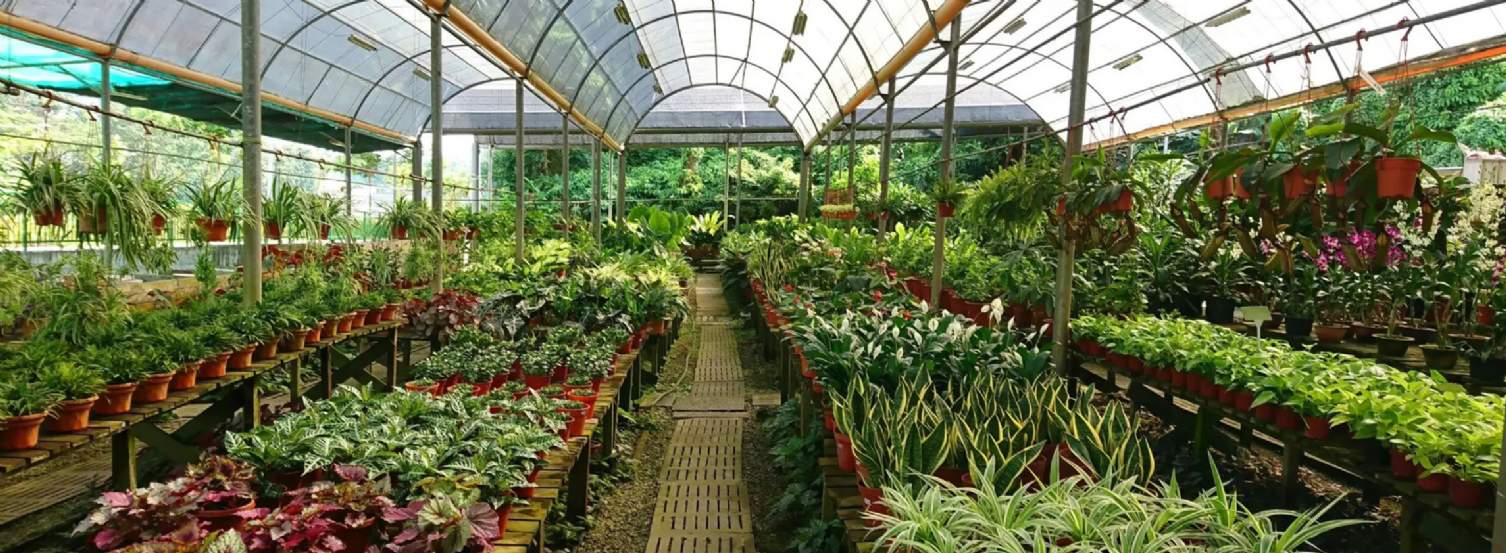
A sustained focus on improving margins, broadening income streams and enhancing operational efficiency has strengthened the garden centre sector's resilience in the face of continued macroeconomic and geopolitical uncertainty. This sets it apart from the wider retail market
Market update and transactional activity
Gardening contributes £38 billion to UK GDP, of which £5.7 billion is from garden retail (Oxford Economics). Collectively, UK households spend around £9 billion on garden retail per year, and there are estimated to be around 200 million visits to garden centres each year.
The number of garden centres continues to evolve with new schemes being developed and some older sites being sold into alternative use. There are an estimated 1,500 to 2,300 garden centres and retail nurseries in the UK. Of these, the vast majority are controlled and owned by individual independent operators. Last year there were an estimated 100 closures, takeovers and retirements within the wider horticultural sector, often reflecting the challenges of operating in the sector without the benefit of scale.
Many of the larger garden centres are owned by groups, with the Top 10 operators currently accounting for around 310 sites, with an average (median) group size of 22 sites.
Trading conditions in 2026 have demonstrated the garden centre sector’s resilience amid geopolitical uncertainty and pressure on household finances. Additionally, this year has seen extreme weather events result in marked deflection of consumer footfall during the hottest periods, with purchases often delayed or made earlier in the season than expected. However, indications from operators suggest that garden centres have been less impacted by this, despite there being tangible links between product and weather. Consumer confidence measures saw a rebound in July, which appears to have coincided with a boost in garden centre sales, at the same time that other retail environments saw falls in footfall by as much as -6%.
Following a long period of significant acquisition and consolidation among the largest operators, businesses are increasingly seeking to improve profitability through operational strategies rather than via expansion. We explore the benefits of these strategies in building market resilience and boosting sales, below.
The ongoing inflationary environment has impacted wider retail investor sentiment. However, garden centres continue to provide good opportunities for operators to expand, with 2026 transaction volumes expected to be in line with 2025. Savills prime garden centre yield for investment sales sits around 6.5%, equivalent to prime high street shops.
Despite ongoing summer heatwaves, July saw a boost in garden centre sales, at the same time that other retail environments saw falls in footfall by as much as -6%.
Tom Whittington, Director, Commercial Research
Operator-led consolidation in 2026 includes further acquisitions by Klondyke, Otter, Caulders and Blue Diamond. Tenure across the sector has become increasingly diverse, with independent operators typically owning sites freehold, while larger groups occupy a significant proportion of leasehold properties. Freehold interests have attracted investor demand, although appetite remains selective, with greater emphasis on covenant strength, rental gearing and longer-term development potential. Operator covenants are typically considered to be stronger than much of the wider retail operator base, supporting the sector’s relative appeal.
Changes to inheritance tax may exacerbate succession planning challenges for some family-owned businesses, encouraging further consolidation among medium-sized and independent garden centres. The sector has also attracted new investors, with Caledonia Investments agreeing a £60 million investment in Blue Diamond in June 2026.
Over the past seven years, there has been significant acquisition and consolidation among the largest operators, but increasingly businesses are seeking to improve profitability through operational rather than expansion strategies.

Cacti | Elm Court Garden Centre
Market challenges largely avoided due to diversification and efficiency drive
The sector entered 2026 facing a challenging backdrop of subdued consumer confidence, rising operating costs and heightened geopolitical uncertainty. While trading softened during the spring and early summer, the sector once again demonstrated a resilience that has become a defining characteristic in recent years.
Following sales growth in January and February, performance weakened between March and June before rebounding strongly later in the summer. Sales increased by 11% year on year, transactions rose by 6%, and average transaction values improved by 3%, suggesting consumer spending was largely deferred rather than lost altogether. Sector sales historically have more peaks and troughs than the wider retail market, but one bad quarter is usually countered by a bounceback the following quarter. Despite four consecutive months of declining sales during the core gardening season, year-to-date sales by July remained 2% ahead of 2025 and 12% above 2024.
Furthermore, INCANS data, which models a business’s likelihood of failure, shows garden centre operators to have a 20% lower risk profile than the wider retail and leisure market, on average. This is as much to do with consistent consumer spending in the sector as well as the operational long-leasehold model that accounts for a significant proportion of the largest group’s tenures.
A key reason for this resilience lies in the changing nature of the sector. Garden centres have evolved well beyond their traditional horticultural roots, with catering, concessions and complementary retail and leisure uses becoming increasingly important drivers of footfall, spend and profitability. Operators incorporating restaurants and other complementary uses have reported gross margin improvements of around 3%, helping offset rising labour, energy and operating costs while reducing reliance on any single category.
Diversification, operational efficiency and community engagement are becoming the foundations of long-term performance.
Amanda Blythe-Smith, Director, Leisure and Trading
Alongside diversification, operators have continued to focus on operational efficiency. Investment in labour planning, procurement and resource management is delivering tangible results, with Blue Diamond reporting a 0.8% reduction in labour costs as a proportion of sales and a record gross profit margin of 54.2%. Across Savills sample of 77 garden centres, average gross margins reached 53.3%, supported in part by the growing contribution of higher-margin food and beverage sales.
Importantly, the sector has also been ahead of many areas of retail in recognising the value of social sustainability. Garden centres increasingly function as community hubs, combining retail, hospitality and leisure with loyalty clubs, workshops, charitable initiatives and community engagement. This not only strengthens customer loyalty and enhances data-led decision-making but reinforces their position as destination-led assets embedded within local communities.
The result is a sector that is increasingly resilient by design. Diversification, operational efficiency and community engagement are no longer ancillary strategies; they are becoming the foundations of long-term performance in an increasingly uncertain environment.
.jpg)
Dumfries & Galloway Region | Garden Centre Guide
Environmental performance: from ESG to operational resilience
The record-breaking summer of 2026 has been a stark reminder of how exposed businesses are to climate-related disruption. For the garden centre sector, prolonged heat, drought and widespread hosepipe bans have influenced both consumer behaviour and trading performance, while highlighting the growing importance of environmental resilience.
Many operators are better prepared than might be expected. Long before this summer's extreme conditions, garden centres had been investing in renewable energy, water conservation and more resource-efficient operating models, driven by a combination of ESG targets, rising costs and energy security concerns.
Larger operators have also expanded their own nursery capacity, strengthening control over supply chains, improving plant availability and reducing exposure to external shocks. This has helped operators with a nimbler response to extreme weather than other retail sectors.
As environmental performance increasingly becomes an operational issue rather than simply an ESG consideration, these investments are proving strategically valuable. Enhanced water and energy security, alongside more resilient supply chains, provide a buffer against both climate and economic volatility.
Climate adaptation is becoming a core commercial consideration for a sector inherently linked to the weather.
Kay Griffiths, Director, Leisure and Trading
Looking ahead, the sector is likely to face increasing weather-related disruption. A developing ‘Super’ El Niño event is expected to result in further climate extremes into 2027, reinforcing the need for businesses to evolve.
In this environment, resilience will be shaped by four key factors: diversification of offer to reduce reliance on seasonal spending patterns; robust supply chain and product planning; improved water security and conservation measures; and investment in energy generation and efficiency.
For a sector that is inherently linked to the weather, climate adaptation is becoming a core commercial consideration. Operators that can combine environmental performance with operational efficiency will be best placed to navigate an increasingly unpredictable trading environment.