
The automotive and car dealership industry globally is ripe for disruption, now more than ever.
Extreme disruption and the changing market suggest that the physical presence and structure of the dealership environment will need to evolve especially as the ‘connected, autonomous, shared and electric vehicles’ (CASE) innovations and digitisation become more mainstream.
Online shopping, ride-sharing services, collision avoidance technology and self-driving cars – smart transportation generally - will lead to a sharp drop in dealers’ sales and profits.
Accordingly, car manufacturers and dealers alike need to rethink the future of this retail sector.
Like most global markets, fringe dealership real estate in metropolitan Australia is facing unprecedented pressures for release to higher value uses.
Concurrently, there is increasing interest in realising higher values, increasing density, appropriately integrating industrial activities with other land uses, and finding new locations and formats for industrial activities.
The rise of ecommerce, congested urban environments and shifting consumer patterns are conspiring to disrupt traditional property markets. The opportunity lies in delivering innovative solutions.
Kevin Mofid, Head of Industrial and Logistics Research, Savills
Disruption Characteristics
The disruption in the sector is characterised by:
- Diversification of the revenue pool toward on-demand mobility services and data-driven services. More specifically, industry is calling this: Transport as a Service (TaaS) or Mobility as a Service (MaaS)
- In the TaaS model, Autonomous Electric Vehicles (AEVs) will typically be owned by fleets rather than the individual, largely driven by the sharing economy
- MaaS is the integration of various forms of transport services into a single mobility service accessible on demand
- Within a more complex and diversified mobility-industry landscape, incumbent players will be forced to compete simultaneously on multiple fronts and cooperate with competitors
- Ultimately, the combination of TaaS and MaaS will equal the end of individual car ownership and the end of the combustion engine
The Statistics
- Overall global car sales will continue to grow, but the annual growth rate is expected to drop from the 3.6% over the last five years to around 2% by 2030
- Australia saw 16 consecutive months of declining sales since April 2018
- Once technological and regulatory issues have been resolved, up to 15% of new cars sold in 2030 could be fully autonomous
- The Australian dealership sector is very fragmented - of approximately 3,500 dealerships, 85% are private individual or family concerns
More than a century ago, New York City went from all horses to cars from 1900-1913. This transport disruption only took 13 years!
Status
- Like other sectors, automotive industry and car dealers are impacted by the political, economic and social changes which characterise the world today
- Many of the mega-trends which stem from this uncertainty have implications for real estate
- Most dealers are exposed to one or two brands which limit the opportunity to change in the short term and with limited immediate influence on product mix. If a brand is struggling, so too is the dealer
- Industry aggregation is slow, however those that are able to, benefit from economies of scale, rationalisation of back office functions and the opportunity to put in place robust and sophisticated systems and processes to control costs and margins
- When the forces are converging and influencing one another, strategic realignment becomes vital
- Resilience and adaptability is therefore important...
With trends playing out differently across the world, the real estate industry should embrace disruption as a positive force for change…and…to embrace this trend, future design and development has to be as flexible and as mixed-use as possible.
Parag Khanna, FutureMap
Trends
- Unpredictable times also offer real opportunities for companies that are ready to adapt
- Dealers and brands are reinventing themselves and responding with new concepts such as:
o Mercedes Me store, Collins St, Melbourne
o Genesis, Pitt St, Sydney
o CarZoos, Westfield, Brisbane
o Mercedes Brisbane, Breakfast Creek
o A.P. Eagers proposed auto Mall at Brisbane Airport - Similar trends are occurring globally including:
o Digital showrooms
o Lifestyle stores
o Pop-up stores - As more auto manufacturers integrate more existing dealerships into digital showrooms, traditional dealerships may be forced to limit their offerings to repairs and services
Real Estate Implications
- It goes without saying that dealerships that are overcapitalised are vulnerable
- Real estate changes will occur across dealerships in many forms, from shifting away from standard form dealerships to new form experiential concept premises
- Navigating the land use and planning constraints will be challenging
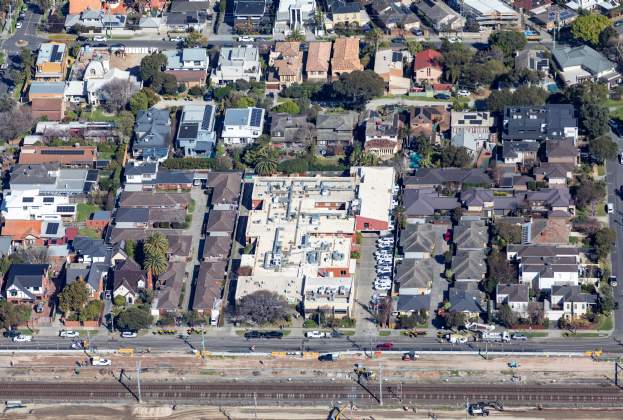
- The inherent location qualities of dealerships offer opportunities for other disrupters such as last mile logistics, retail, commercial, industrial or mixed-use reincarnations
- Opportunities for complete transformation based on highest and best use
- Slow moving dealerships may find opportunities limited by supply and demand factors, lack of suitability of residual sites, receivership challenges or simple lack of options for their locations.
- Proximity to a new demographic of inner city lifestyle workers offers opportunities for integrated mixed-use developments that harness other disruptions, such as the SmartShed concept developed by Savills and ScottBrownriggs

More Information
- View this content in a downloadable report
- Download the 'New Approaches to Masterplanning Industrial Developments' report
Lawson Katiza is an Associate Director and Advisory Lead (QLD & NT) within Savills Project Management.
The Property Advisory team within Savills Project Management provides a range of services to reposition real estate and transition portfolios in response to market disruption. Our integrated approach to real estate solutions across the broader Savills family enables us to harness greater value for clients whether they are retaining or transacting the asset.
.jpg?1790824940.3804)
.jpg?1790824940.3804)
.jpg?1790824940.3804)
.jpg?1790824940.3804)
.jpg?1790824940.3804)


.jpg?1790824940.38092)